

What builders get
- Shared liquidity: Access the same liquidity layer used across the Orderly ecosystem.
- Orderbook infrastructure: Build on top of Orderly’s matching and order management services instead of operating your own engine.
- Omnichain user flows: Support registration, deposits, withdrawals, and trading from supported chains.
- Flexible integration paths: Choose between SDKs, UI components, Python tooling, or direct API access.
- Self-custody model: Users keep control of their wallets while interacting with your application.
High-level architecture
Orderly’s omnichain system is organized into three layers: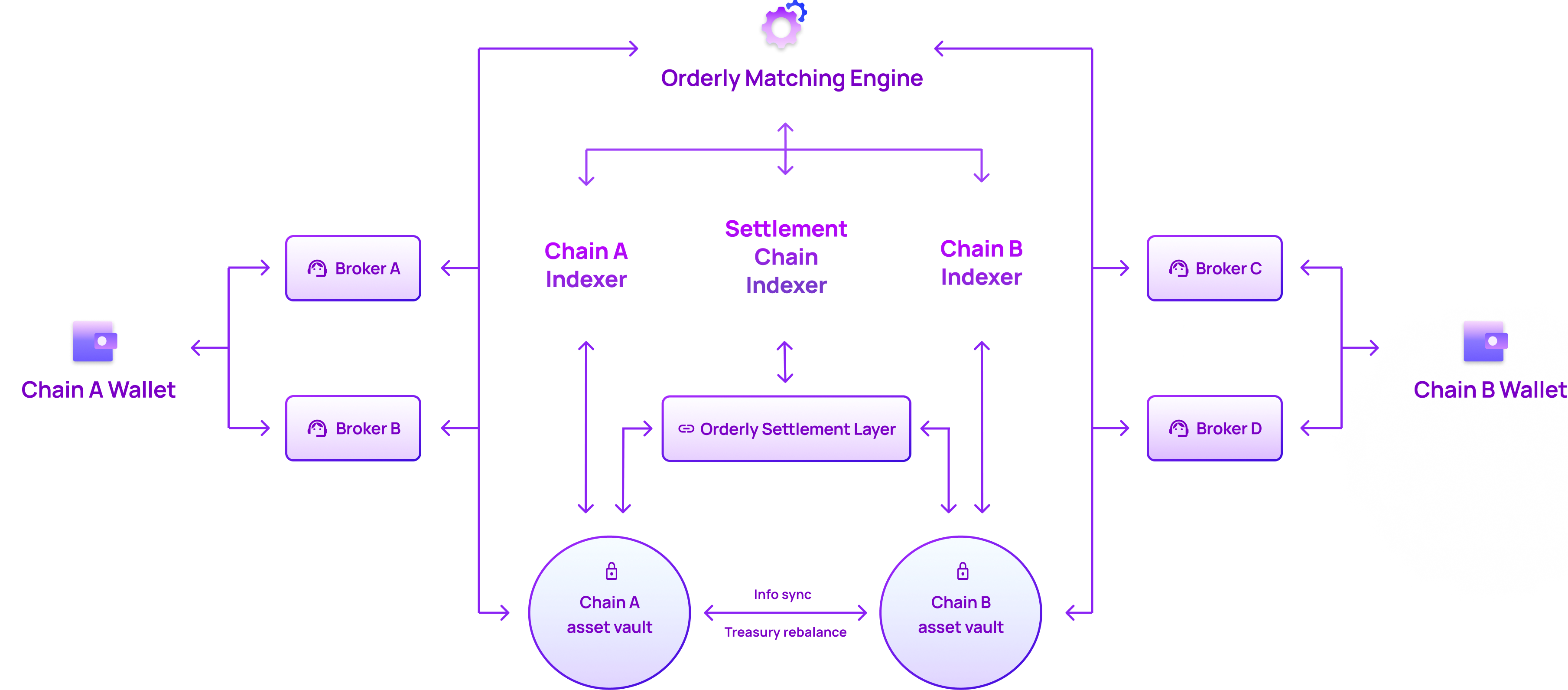
- Asset Layer: Lives on each supported chain and handles user-facing actions such as account registration, deposits, and withdrawals.
- Settlement Layer: Lives on a single chain and acts as the transaction ledger behind the scenes.
- Engine Layer: Runs the orderbook and related trading services used for order management and execution.
Start here
Use these pages as your builder onboarding path:- Plan the integration: Start with the Integration Checklist for the overall build and launch sequence.
- Understand the system: Review the Smart Contract Overview and Smart Contract Addresses.
- Implement core user flows: Follow Accounts, Wallet Authentication, Withdrawal & Deposit, and Order Management.
- Cover trading operations: Add Settle PnL, Custom Fees, and real-time integrations from the WebSocket API docs.
- Integrate against the APIs: Use the API introduction and API authentication guide.
- Display announcements and campaigns: Use the public Blogpost API to retrieve published feeds and articles for your platform.
- Handle onboarding questions: Use Integration FAQs and Partner Support for builder-facing support guidance.
Start with Builder Onboarding. If you are
using Orderly One, continue from https://dex.orderly.network/. For
implementation questions, reach out via email,
Discord, or Telegram.